Eggleston talks about our

70th Anniversary Gala,

Disability Pride Month, and Warrior Bridge

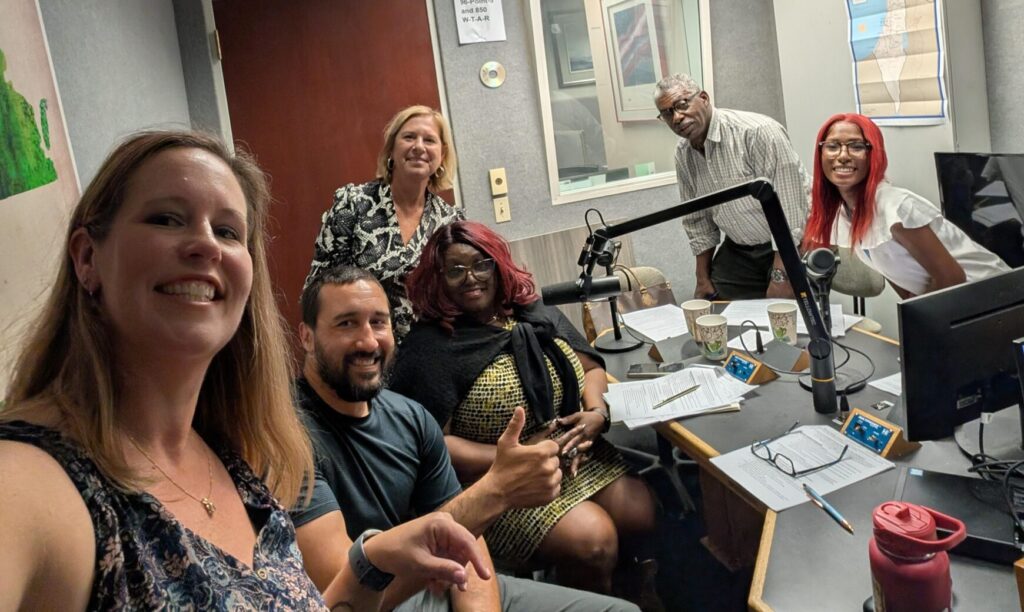
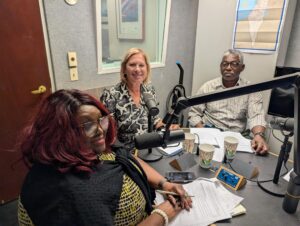
On July 26, 2025, Eggleston’s Vice President of Marketing and Development, Geraldine Eady and Director of Marketing, Kristen Ricks, were joined by several guests on News Talk 790 WNIS “Ask the Experts” show with Damien Hall. We started out by sharing a brief history of how and why Eggleston was started and how the organization has expanded over the last 70 years.

We shared highlights from the recent 16th Annual OK5K and 1-Mile Run, Walk and Roll. Thank you to all the participants, volunteers and staff that made this event such a success.

Geraldine shared the details about our 70th Anniversary Gala which will be taking place on September 18th at The Main in Norfolk.  She announced our host for the gala will be Barbara Hamm Lee and entertainment will be provided by The Jae Sinnett Trio. We were honored to have Charity Volman-Winn, TowneBank Norfolk’s President, join us to talk about TowneBank and their involvement in the community. Click on the link below to hear the full story.

After the break we continued chatting with Charity about the variety of services TowneBank offers and about their continued support of Eggleston. As the presenting sponsor of our 70th Anniversary gala, TowneBank is leading the way. To hear from Charity and Geraldine click on the link below.


In the second half of the show we checked in on what’s new at the Eggleston Garden Center and Farmer’s Market.  Now is a great time to stop by for locally harvested produce. 
Eggleston’s shredding divisions will also be hosting Peninsula Drop off days on August 20th and October 22nd at 645 J. Clyde Morris Blvd. for anyone who would like to dispose of unwanted papers and old documents in a secure and save manner. 
Geraldine educated the listeners on what is Disability Pride month and how Eggleston chose to celebrate this year.  We also introduced Zia’ anna Anthony-William, one of Eggleston’s interns to talk about her experience as an intern and share some advise for anyone who is interested in a future internship or employment with Eggleston. To hear more click on the link below.

In the final segment we introduce Gary Cooper, Eggleston’s Veteran Coordinator, to talk about our Warrior Bridge Veteran’s program.  Gary shares what is Warrior Bridge, who qualifies for this program and how people can connect to learn more.  You can also learn more about how you can get involved with Eggleston from volunteering, making a donation, sign up for a newsletter, etc. Learn more about Eggleston and how you can help make a difference in the Hampton Roads community.

Healing and Giving Back through Art


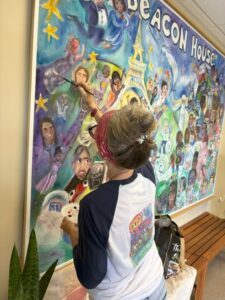
Have you ever visited Brain Injury Services and noticed the large mural on the wall?

If so, you might have wondered about the artist behind it. That mural is the work of Karen, a dedicated member of Beacon House for the past 14 years.

In 2010, Karen had several concussions, which made it harder for her to manage everyday tasks and decisions. Through her time at Beacon House, she found structure and support—tools that helped her regain stability and apply those routines in her daily life. “Beacon House made me feel normalized and accepted in crisis,” she shared. “It opened a door for me to be myself, while also challenging me to grow.”

With a degree in art, Karen expressed interest in leading a community art project. That vision became the mural many visitors now admire. It continues to evolve, as she adds new members and staff to the piece. Beyond the mural, Karen has used her artistic gifts to give back, volunteering with the military and St. Mary’s Home.

Karen remains an active and inspiring part of the Beacon House community. She guides others through art projects, participates in the support group, and assists in the annual Headstrong Helmet Challenge. Recently, she returned to work as a preschool teacher and joined the Virginia Brain Injury Council, continuing her mission to support and advocate for others.

When asked what advice she’d offer fellow survivors, Karen said: “Look outside yourself and don’t give up. Focus on the positive. Your brain injury doesn’t define you.”

Eggleston’s Brain Injury Services is proud of Karen’s accomplishments and grateful for the many ways she uplifts those around her. We can’t wait to see what she does next!

Written by Jamie Peed, Brain Injury Case Manager

Adults with disabilities often face barriers when seeking meaningful work. Despite having valuable skills and a strong work ethic, traditional job opportunities may not provide the inclusive environments they need to thrive.

Supported employment helps remove those barriers. It connects adults with disabilities to jobs that match their interests and strengths while offering ongoing support through job coaching and training. For organizations like Eggleston, it’s not only a service but a mission to promote independence, inclusion, and opportunity—values we’re especially proud to highlight during Disability Pride Month in July, and every day through our work.

What is Supported Employment?

Supported employment is a person-centered model that helps adults with disabilities find and keep jobs in their communities. Unlike traditional placement services, it includes:

  • Job Coaching: One-on-one support during the job search and on the job. Coaches help with tasks, communication, and confidence-building.
  • Skills Training: Hands-on learning in real work environments that aligns with career goals.
  • Long-Term Support: Ongoing help that adapts as needs or job roles change.

This model focuses on individual strengths, not limitations, and leads to lasting employment success.

What Does Supported Employment Mean for Adults with Disabilities?

For adults with disabilities, supported employment for people with disabilities means real opportunities, real pay, and real inclusion. This model centers on several key components that work together to create lasting employment success:

  • Customized Job Matching: Supported employment begins with understanding each person’s strengths, interests, and goals. Someone who loves cars may find a fit at Eggleston’s Auto Center, detailing vehicles or assisting with maintenance. A person who enjoys nature might thrive in the Garden Center or Farmer’s Market, caring for plants and helping customers. Matching the job to the person increases confidence and long-term success.
  • On-the-Job Learning: Trained professionals work one-on-one with individuals to develop workplace skills, navigate job responsibilities, and build confidence. Coaches provide support both during the job search process and after employment begins, ensuring sustainable success.
  • Inclusive Workplaces: Eggleston partners with employers to build workplaces that value diversity and ability. These environments create space for individuals with disabilities to contribute meaningfully, while fostering empathy, teamwork, and mutual respect among all employees.
  • Competitive Wages: Supported employment promotes fair, competitive pay, not token jobs or unpaid work. Earning a paycheck gives individuals with disabilities the freedom to support themselves and the dignity that comes from contributing to their community.
  • Community and Connection: Employment opens doors to friendships, teamwork, and social engagement. Being part of a workplace helps individuals feel valued, included, and connected, leading to a stronger sense of purpose and well-being.

This is what supported employment means for adults with disabilities: a path to belonging, achievement, and independence.

Benefits of Supported Employment for Individuals and Employers

A person working at one of the Eggleston services facilities, as part of a supported employment program.

The benefits of supported employment extend beyond individuals. They also impact employers and entire communities.

For Individuals:

  • Independence: A paycheck gives people control over their choices and goals.
  • Improved Quality of Life: Work boosts self-esteem and provides daily structure.
  • Purpose: Participants contribute meaningfully, whether detailing or servicing vehicles, maintaining landscapes, supporting admin services, and more.

For Employers:

  • Reliable Workers: Many supported employees are highly motivated and detail-oriented.
  • Inclusive Culture: Hiring people with disabilities fosters understanding and team morale.
  • Support Services: Eggleston’s job coaches assist with training and problem-solving.
  • Reduced Turnover: Long-term support creates stability for both employee and employer.

Eggleston’s Supported Employment Programs

he scene highlights the supportive interaction in a training space for adults with disabilities.

Eggleston offers decades of experience in connecting adults with disabilities to meaningful careers.

  • Job Training: Participants build skills in automotive, landscaping, shredding, and more, working alongside experienced staff in real job settings.
  • Placement Services: Staff match individuals to employers and help create supportive environments.
  • Ongoing Support: Regular check-ins and coaching help individuals grow in their roles and take on new challenges.

The success of these programs is reflected in the lives changed and the skills gained, on and off the job.

Why it Matters: A Call for Inclusive Hiring

Despite progress, employment for people with disabilities remains an equity issue. Inclusive hiring isn’t just a nice idea. It’s a smart investment in stronger communities.

  • Businesses benefit from diverse thinking and loyal, capable team members.
  • Partnerships with organizations like Eggleston provide tools for success without added burden to employers.
  • Communities grow when everyone is included in the workforce.

Building Inclusive Communities Through Meaningful Work

Supported employment is more than job placement. It’s a path to self-reliance, inclusion, and dignity for people of all abilities. It empowers individuals and enriches the communities they serve.

Whether you’re an employer ready to build a more inclusive team or someone looking for meaningful jobs for adults with disabilities, Eggleston is here to help.

What if getting rid of your old car was easier than selling it, and felt good?

Forget the listings, lowball offers, and hassle of paperwork. Donating your vehicle is a smarter, simpler way to say goodbye to that unwanted car, and unlock a possible tax deduction while you’re at it. Even better? It’s an opportunity to make a real impact, helping nonprofit organizations like Eggleston empower lives and create community change.

But where should you begin? Start with our Vehicle Donation Prep Checklist to ensure a smooth process from start to finish. From paperwork to pre-pickup tips, our guide breaks down the key steps before donating a vehicle.

Initial Evaluation 

Car Donation Requirements 

Before jumping into paperwork and logistics, ask yourself this simple question: “Is my car ready to donate?” The good news is that Eggleston accepts non-running vehicles and will even arrange for free towing. Here’s what else to consider:

  • Does the car need to be operational?
    No, Eggleston accepts non-operable vehicles since our team can repair, recycle, or resell them to support our mission.
  • What’s the fair market value?
    Knowing your vehicle’s value is critical for tax deduction purposes. Use tools like Kelley Blue Book or NADA Guides to determine its fair market value. If the car is sold for over $500, you can claim the full sale price for your tax deduction. Below $500? You can still claim the fair market value up to $500, per IRS guidelines.
  • Be honest about its condition. A clear, detailed description of your car’s condition helps us plan for repairs, resale, or recycling efforts accurately. Transparency benefits everyone involved.

Documents Needed to Donate a Car

One of the essential questions people ask is, “What paperwork is needed for a car donation?” Gathering the correct documents beforehand makes the entire process seamless. Add the following to your Vehicle Donation Prep Checklist:

  • Vehicle Title
    Can you donate a car without a title? No. Eggleston always requires a valid title. Without it, your car donation won’t be accepted. If the title is missing, you may be able to apply for a replacement through your local DMV.
  • Odometer Disclosure
    Some states require you to disclose your car’s mileage at the time of donation. Double-check the regulations in your area.
  • Lien Release Paperwork
    If your car had a loan, ensure you’ve cleared it and obtained a lien release from your lender.
  • State-Specific Forms
    Depending on your state, there may be additional documentation required, such as donation affidavits or tax forms. Confirm with your local DMV or nonprofit.
  • Tax Documentation
    Once your car is picked up and sold, you’ll receive IRS Form 1098-C and a thank-you letter summarizing the sale. These will be critical for your tax filing. You can find more details in our guide to car donation tax deduction. Making sure all your paperwork is in order ensures the process is smooth and stress-free.

How to Prepare a Car for Donation 

Preparing your car for donation doesn’t just involve cleaning and removing personal items. These steps will help you hand over a donation-ready vehicle while saving time and effort:

1. Clean the Vehicle 

Give your car a good wash and vacuum the interior. While Eggleston will handle detailing, presenting a clean car shows respect and makes inspections easier for us.

2. What to Remove Before Donating a Car

Take off your license plates. Many states require you to remove the license plates before transferring ownership. Check your local laws to confirm this step. 

3. Personal Belongings 

Check thoroughly for personal items. Don’t forget common hiding spots like glove compartments, under seats, and trunk storage. 

4. Cancel Insurance and Registration 

Once your car is donated, cancel your insurance policy and registration to avoid any unnecessary charges or liabilities. 

5. What Not to Leave 

Avoid leaving sensitive items like house keys, garage openers, or bank paperwork in the vehicle.

By using this vehicle donation checklist, you’ll make the process smoother for both Eggleston and yourself.

Choosing a Charity Like Eggleston 

Once your car is prepped, the next big decision is to choose where it goes. When comparing car donation services, trust and impact matter. Here’s what to look for:

  • 501(c)(3) Status – Ensure the nonprofit is registered as a 501(c)(3) organization. This status allows your donation to be tax-deductible. Search the IRS Tax-Exempt Organization list to verify legitimacy. 
  • Transparency – Donate to a charity that’s clear about where your funds go. For example, Eggleston uses vehicle donations to support job training and education for individuals with disabilities in the Virginia Beach community. 
  • Local Impact – Keep your donation local where possible. Eggleston auctions vehicles locally, ensuring proceeds stay within the community to directly benefit local initiatives. 

Why trust Eggleston? With decades of experience, we’re known for our mission-driven impact and commitment to empowering lives. See why Eggleston is one of the best car donation services in Virginia Beach.

Vehicle Donation FAQs

1. How long does the donation process take? 

The process is quick and simple. Typically, you can contact us, arrange a tow, and complete required paperwork in as little as a couple of days. 

2. How does Eggleston get my vehicle?

We will schedule a tow, or you may drop it off at our Norfolk Auto Center located at 3525 N. Military Highway, Norfolk, VA 23518.

3. Can I donate a car that doesn’t run? 

Yes. Eggleston accepts vehicles running or not.

4. Will I get a receipt immediately? 

Yes. After we receive your vehicle, we will provide a thank-you letter right away. Final tax documents, such as IRS Form 1098-C, will be issued once the vehicle has been sold.

For our complete list of FAQs, visit Eggleston’s vehicle donation services page.

Make a Difference Today 

By following this Vehicle Donation Prep Checklist, you’re ensuring a smooth process that maximizes the impact of your generous contribution. From preparing your car to gathering the necessary documents, each step brings you closer to making a difference in our community. 

Eggleston simplifies car donation and ensures your contribution changes lives. Are you ready to take the next step? 

Start your donation today here and join a cause that empowers individuals with disabilities, strengthens communities, and drives change.

Please use these lists as a guide for our July 4, 2025 hours in observance of the Independence Day holiday. For questions or additional information please call our front desk team at 757-858-8011 or email them at Info@egglestonservices.org

Thank You!